Material by mission
Sanded plywood, exterior-grade plywood, solid pine, and future panel systems are selected around the job the crate is expected to do.
 Freedom Crate Co.Freedom Crate
Research & development · materials lab
Freedom Crate Co. treats the box as a complete structure: material, joinery, hardware, interior protection, and field finish all have to work together. This is where those systems are developed.
The design rule
A rugged coating cannot rescue weak hardware. Strong fasteners cannot rescue a poor load path. R&D starts by deciding what the crate must survive, then choosing the material, structure, protection, and serviceability around that mission.
System architecture
Each layer solves a different failure mode. The goal is not to make every crate identical; it is to make each configuration internally consistent with how it will actually be used.
Sanded plywood, exterior-grade plywood, solid pine, and future panel systems are selected around the job the crate is expected to do.
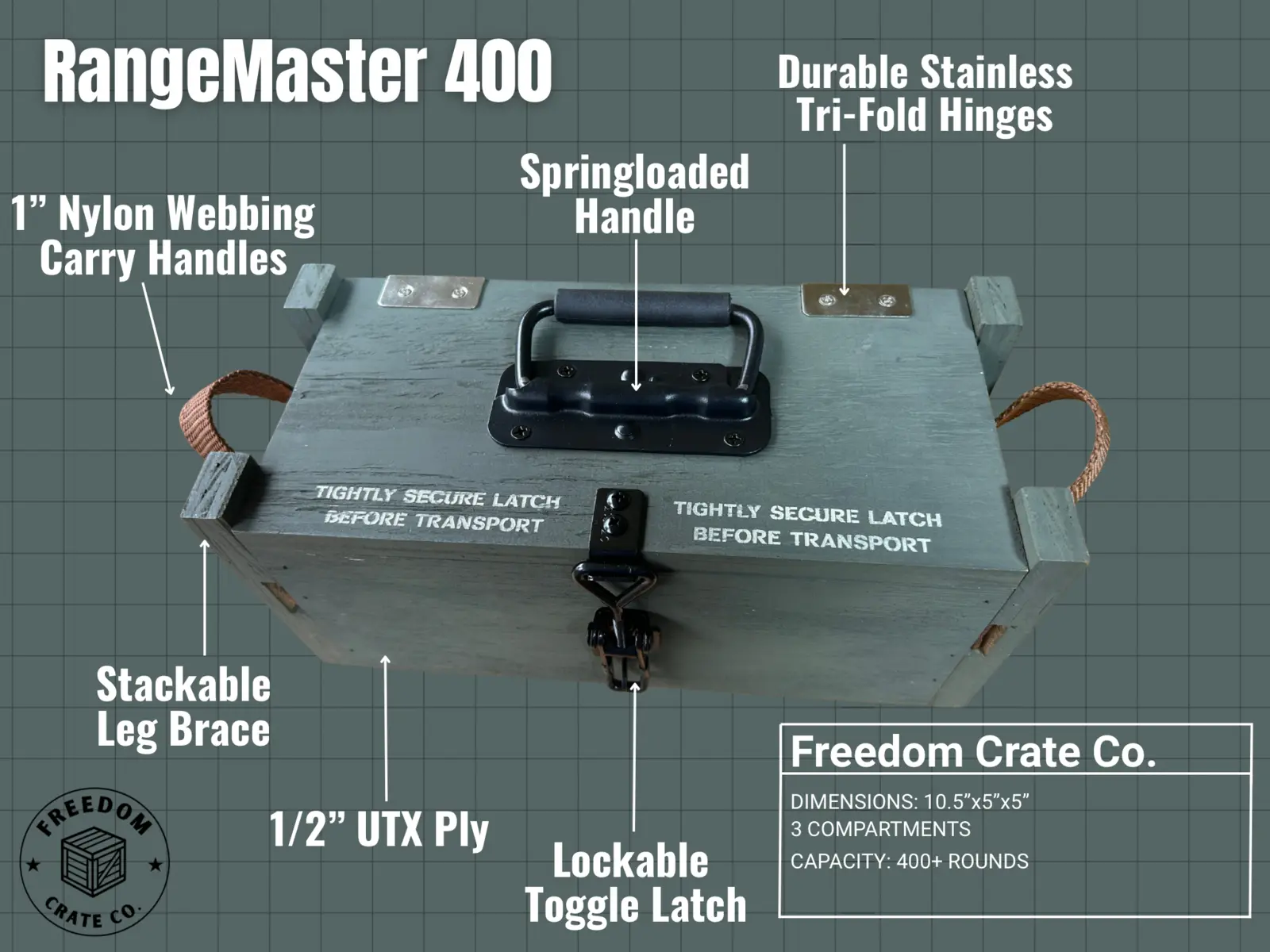
Joinery, shear-locking panels, legs, handles, and latch geometry are treated as a system instead of isolated hardware choices.
Penetrating epoxy seals exposed fibers and interior seams; selected builds add a tougher abrasion-resistant liner over that sealed base.
Paint and experimental tougher exterior coatings are evaluated for adhesion, abrasion, weather exposure, grip, and repairability.
INTERIOR SYSTEM / PRODUCTIONInterior protection
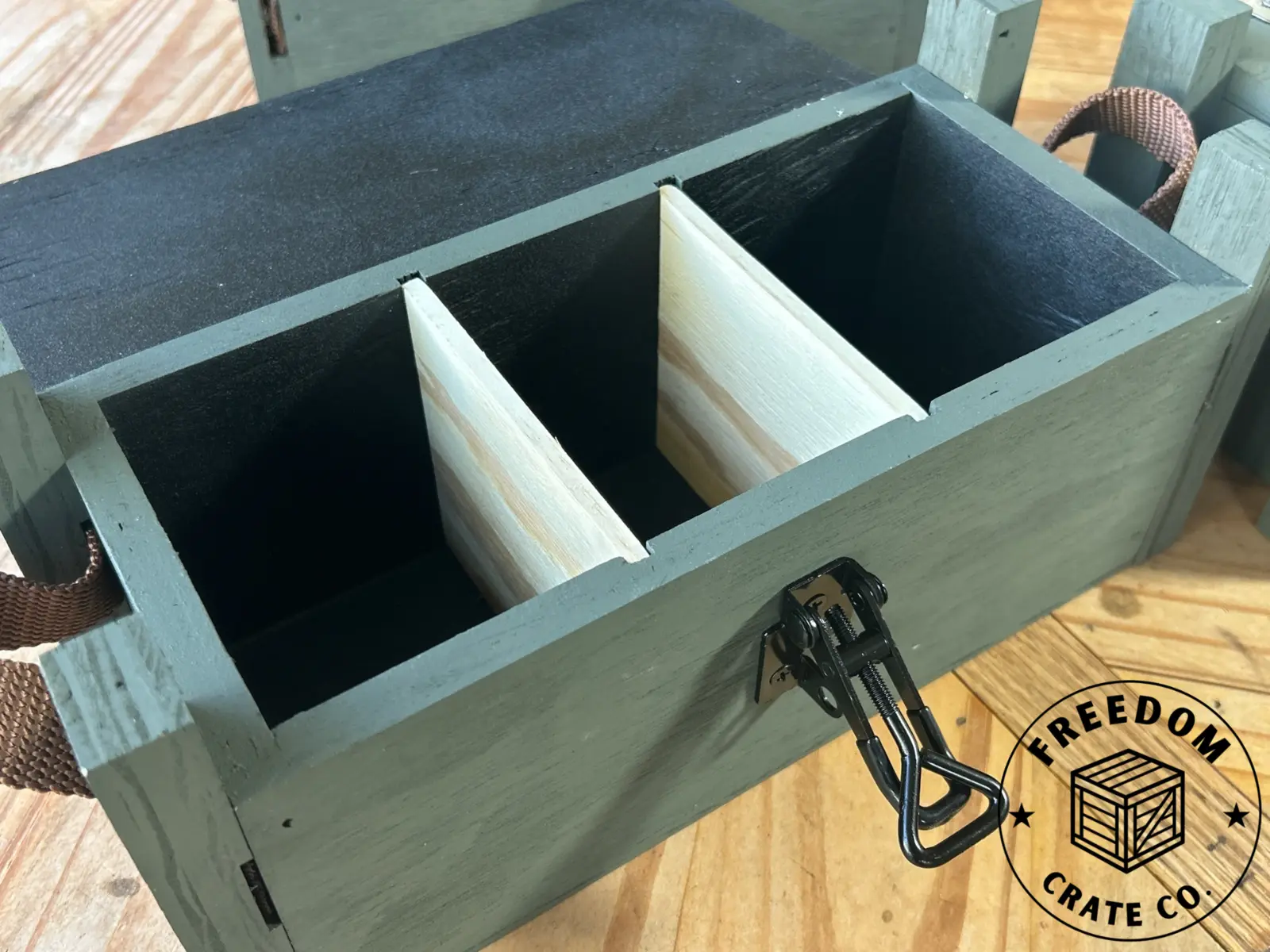
Armor Core is built around penetrating epoxy rather than relying on a surface coating alone. The objective is to seal exposed fibers and seams first, then add abrasion protection where the build calls for it.
Interior surfaces, exposed edges, and vulnerable seams receive penetrating epoxy.
Interior corners can develop a cured epoxy fillet that seals and reinforces the joint line.
Selected builds receive an abrasion-resistant liner after the sealed base has cured.
 EXTERIOR SYSTEM / ACTIVE R&D
Exterior protection
The exterior program explores tougher field finishes and polyelastomer-style coatings for crates expected to see truck beds, dragging, stacking, moisture, and repeated handling. It remains a development track rather than a blanket claim applied to every box.
R&D rule: experimental exterior systems stay labeled as research until repeated field use supports a production standard.
Materials by mission
The current strategy intentionally uses different materials for presentation, field use, compact range platforms, and specialty work. That keeps material choice tied to function instead of marketing.
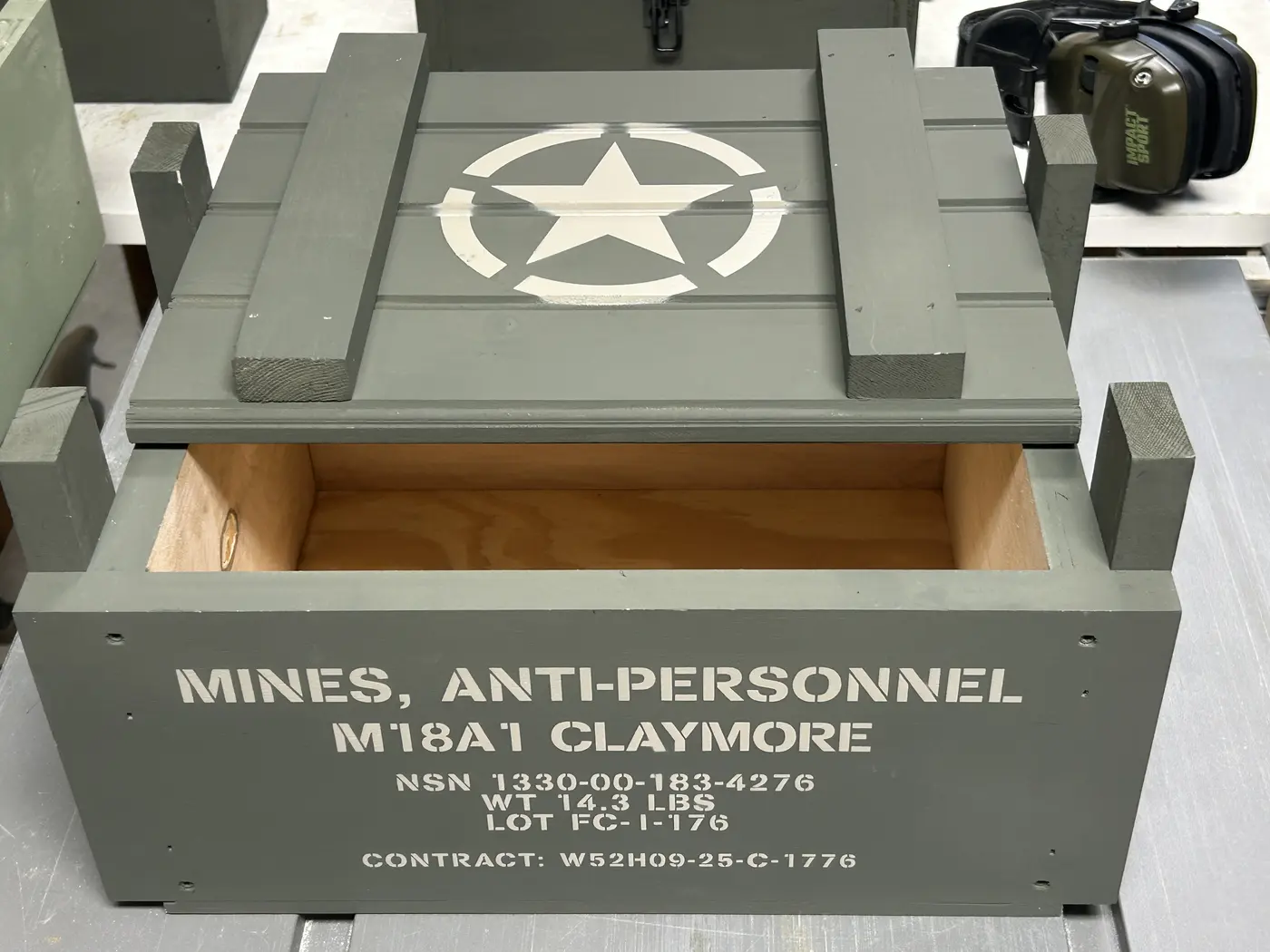
Flat, consistent, smooth, and well suited to clean stenciling and controlled-environment use.
Current strategyChosen when moisture resistance, utility, and harder handling matter more than a furniture-smooth face.
Current strategyKeeps the RangeMaster platform compact while the protected interior adds durability where loose gear and ammunition make contact.
Current strategyUsed selectively where real-wood character, repairability, and traditional crate appearance outweigh production consistency.
Selective useA candidate for future evaluation where surface abrasion resistance and moisture management justify the added sourcing complexity.
EvaluationOn the bench
R&D exists so production does not freeze around the first design that worked. New panels, coatings, hardware geometry, stackability features, and repair methods can earn their way into the lineup through testing.
Evaluate edge sealing, hardware compatibility, abrasion behavior, sourcing, and whether the extra material complexity creates a real field advantage.
Explore leg or corner geometry that protects lid finishes while making stacked crates more stable during storage and transport.
Keep wear items replaceable where possible so handles, latches, finishes, and damaged components do not automatically turn the entire crate into waste.
When an R&D idea becomes a test, failure, adopted fix, or production rule, the evidence belongs in the Engineering Notebook. Planned work stays labeled planned until there is something real to report.
Read the Engineering NotebookTechnical questions
Buyers, repeat customers, and contracting officers can request more detail about a material, coating, configuration, or documented test.
Contact Freedom Crate Co.